I used to think finishing was a quick final step: print it, fold it, ship it. But through my growing number of apparel engagements I’m fast learning that finishing has quietly become a major complexity – one that steadily eats away at profits.
Modern customers often request multiple layers of finishing: sewing, branded neck labels, heat-pressed tags, custom packaging, sticker throw-ins and even paired kitting by destination. Each new element adds extra steps, extra hands, and extra opportunities for error.
The challenge isn’t just complexity itself; it’s the hidden cost. The print might be flawless, but a missed barcode, incorrect size sticker, or sloppy fold can mean redoing the entire job. These small errors quickly compound. Margins erode under untracked manual tasks, quality-control overhead balloons, and staff spend more hours packaging than they do actually printing.
I’ve found that the most common result is a mess of finishing workflows that secretly and silently drain margins instead of adding value – turning what should be a competitive advantage into a costly burden.
How Efficient Shops Regain Control
The most successful decorators I engage aren’t cutting back on finishing – they’re changing their approach. Instead of treating finishing as an afterthought, they integrate it into the core of their workflow, managing it as intentionally as printing itself.
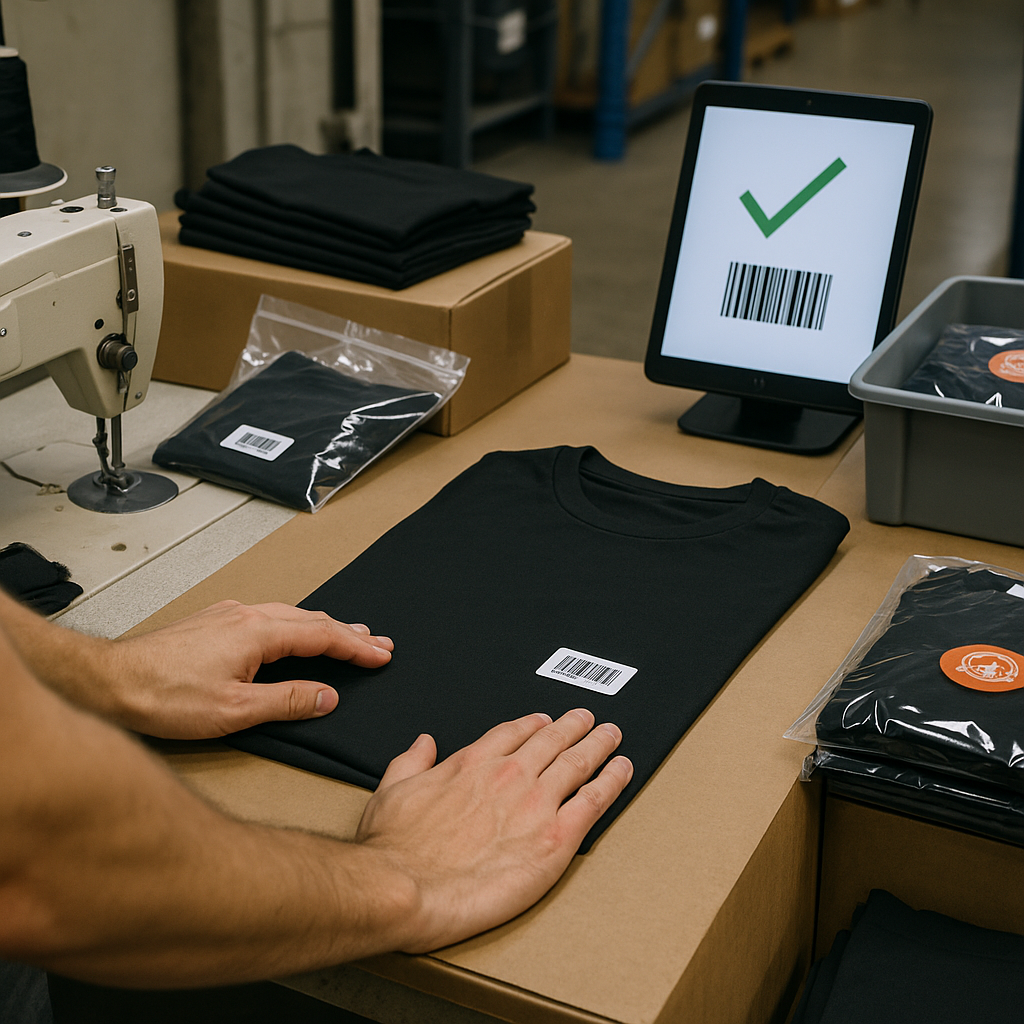
These shops start by standardizing finishing processes. They establish structured steps for common tasks like labeling, bagging, and kitting, removing the need for experienced “domain” knowledge, guesswork or ad hoc decisions. Barcodes and digital and/or physical visual prompts track the completion of each step, ensuring everything is accounted for and minimizing rework.
They group similar finishing jobs into logical batches, significantly reducing handling times and creating what I often refer to in this blog as a “conveyor” process. By capturing detailed data like time spent per task or frequent error points and reasons they continuously improve their processes, identifying problem areas and eliminating repeat mistakes.
The goal isn’t to eliminate finishing tasks, it’s to make them clear, repeatable, and reliable. When finishing processes are documented and predictable, it stops causing chaos and becomes a natural, streamlined part of your workflow.
Take Stock: Is Your Finishing Process a Strength or a Liability?
Here are five key questions to ask yourself to gauge how effective your finishing workflow really is:
- Do you have clear, documented standards for every finishing step, so your team knows exactly what’s expected each time?
- Are finishing tasks systematically tracked (e.g., barcode scans or visual confirmations), reducing the chance of errors or omissions?
- Can your team confidently batch jobs by similar finishing requirements, ensuring smooth, repeatable and efficient handling?
- Do you consistently capture and review data on your finishing stage, clearly identifying bottlenecks or costly errors?
- Could you comfortably accept a large-scale order with complex finishing demands tomorrow without needing to rethink your processes?
If you answered ‘yes’ to all five, your finishing workflow is well-equipped for growth. If not, we have a detailed assessment checklist available – built from best practices at the industry’s most efficient shops. To get it, just DM Andrew and we’ll share it with you.