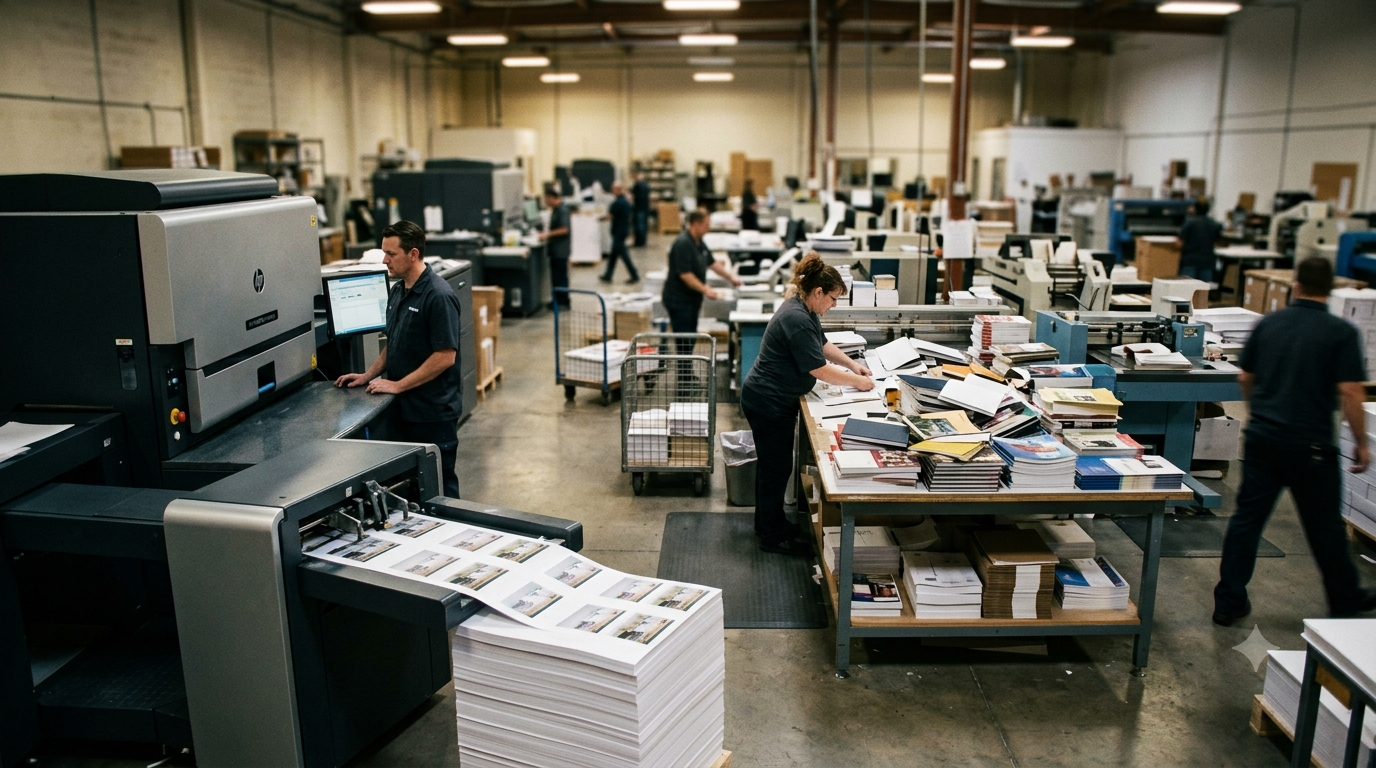
For years, automation spend in print on demand and make to order went almost entirely into pre-press and file workflow (and putting big dollars into the print engines).
Downstream of the press was an afterthought – almost always there was a black hole between printing and shipping.
Work went in, came out the other side, and nobody could tell you where it dwelled, how much labor it consumed, or what the fail rate was along the way. Businesses ran on tribal knowledge and a handful of motivated people holding it together (a pretty fragile way to run anything, let alone a factory).
That’s changing. Reading PI World’s coverage this week of digital cutting and routing confirmed for me something we’ve been seeing in our own client base for a while – print is no longer the bottleneck. Whether it be digital print, DTG, DTF, DTO, dye-sublimation or embroidery, getting ink on an object is not the capacity constraint – neither in time nor cost.
The constraint has moved. It’s now finishing, and the reason is that the size of product ranges and product options has exploded as markets have segmented and simpler products have commoditized. The market has had to add options to differentiate product and maintain margins.
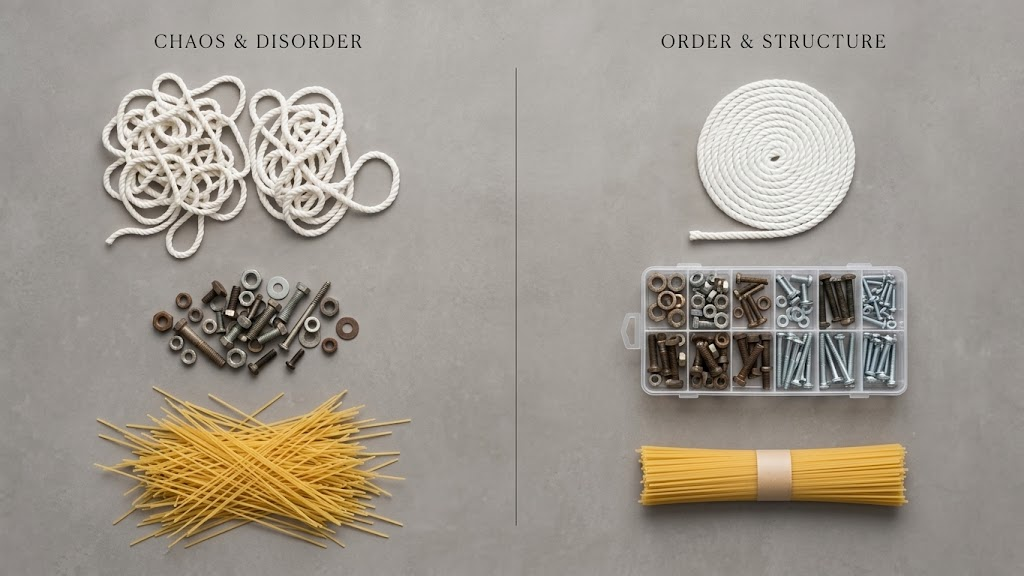
The end result is that the old days of scores of manufacturing pathways in a factory have exploded into thousands of combinatorial groupings. Capability has bred complexity.
Why flow matters more than speed
And the problem isn’t any single finishing stage. It’s the number of them. Depending on the product, a job might need trimming, cutting, routing, matching, pressing, additional decoration, pre-shipping and accessorising – each one a sub-process, most of them still dependent on individual operators and disconnected systems.
The result is familiar to anyone who’s walked a finishing floor – production looks strong at the front end, then slows through finishing as volume bubbles up at particular stages (the polite way of saying stock piled high at a process stage). SLAs get missed. Profit leaks out through steps nobody’s watching.
I see all too often that the solution is throwing hardware at the slow stage. Sometimes that’s right, but often it isn’t. What actually fixes flow is getting work moving through the factory at the right rate, so each stage is fed just-in-time instead of in surges (or floods).
What software needs to do
To make this happen comes down to three functions:
- Sequence work into optimal batches by configuration and quantity (that sets up the flow)
- Provide visibility – where the work is, its cycle rate and what its status is (provides the feedback mechanism for adjusting the flow rate and the insight to where the problem really lies)
- Deliver instruction – what to do, and what to do next (support the team so that they have an information safety net and clear guidance how to execute work, no matter how complex the job)
Software-led workflow, run by the priority rules that define how your business actually operates, replaces manual interpretation and reduces how much the business depends on any one specialist knowing the process by heart. Production gets consistent, resilient and – in a labor market this tight – more flexible in who can do what.
Finishing is where the value is now
Decoration, embellishment and options have become the main way businesses differentiate, and product ranges have exploded even in categories that used to be simple, like apparel.
More options means more complex workflows, which feeds straight back into the need for accurate routing at the right cadence, with visibility and control built in.
A low-margin commodity business can get by on simple sequencing. Add variability – more SKUs, more decoration options, more product types – and software stops being a nice-to-have and becomes the thing holding the operation together.
So the question worth asking isn’t how fast you can print anymore. It’s where does the job stop flowing after printing?