As business cycles shorten, so too does the time leaders have to adapt. According to the OECD (“OECD Economic Outlook,” 2023), the average business cycle has compressed from eight years in the 1980s to closer to five years today. Technology refresh cycles are even faster, and in print on demand it’s gone to another level.
Take apparel manufacturing for example. It took nearly forty years to move from the invention of plastisol inks in the 1960s and the t‑shirt explosion to the first real short‑run flexibility in garment production. Within the next decade we saw DTG, automated baggers, computer‑to‑screen, and hybrid presses arrive in the 2010s (note the technologies all appeared earlier but this is when they went mainstream). Another ten years brought DTF in the early 2020s, and layered on top of that the rise of true multi‑decoration workflows and blurring of merch into apparel with its specialty print technologies (such as UV-LED, DTO and dynamic non jig based DTO). In parallel has been the explosion of e‑commerce, product choice and consumer expectations. The combined effect is that the rate of change and workflow demands haven’t crept up — they’ve detonated in the past ten years.
Add to this a more volatile regulatory environment and steadily rising costs of goods and labor, and it is clear that the traditional fixed approach to running a factory is under pressure.
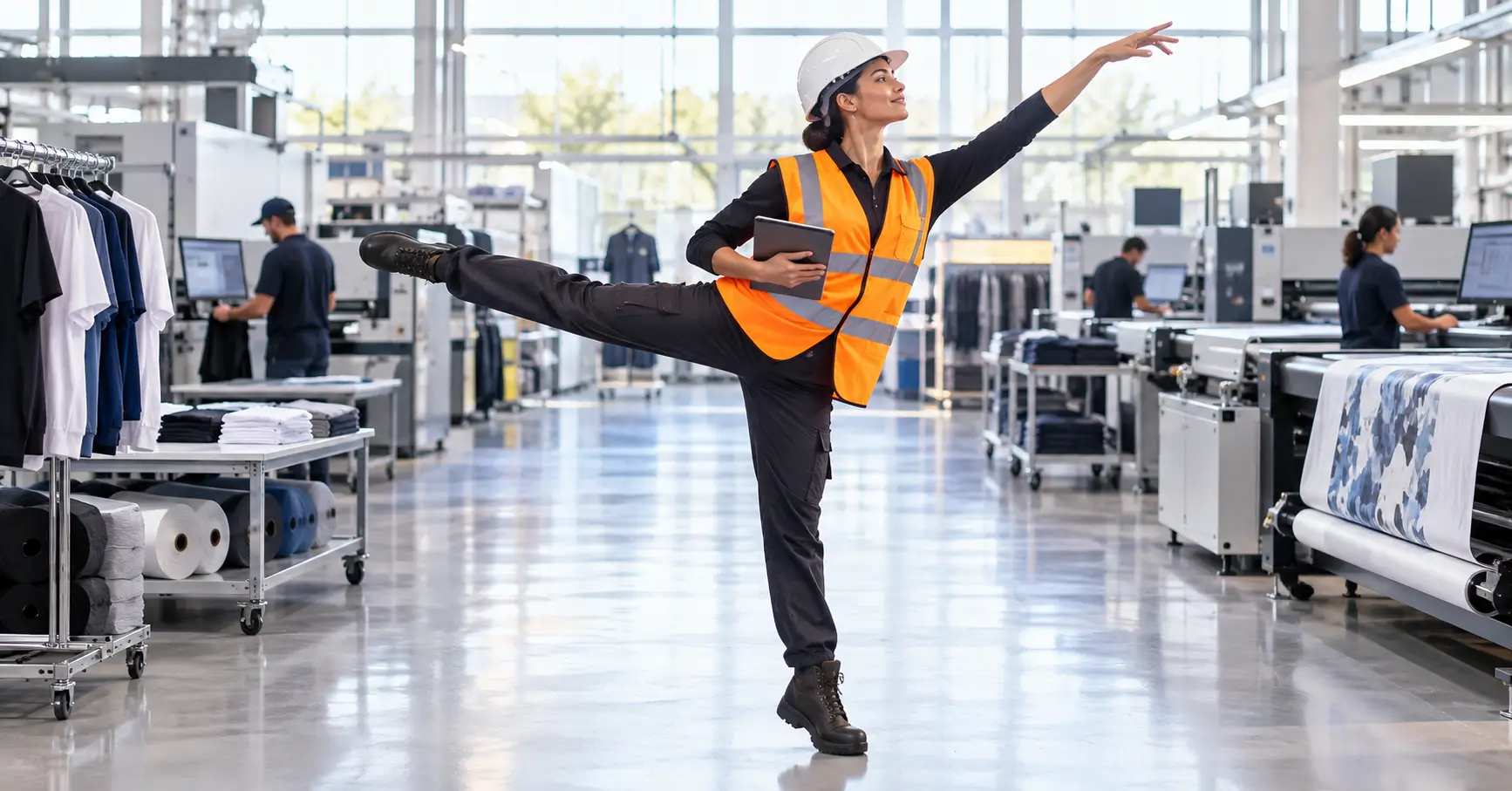
One of the clear advantages in print on demand is supposed to be flexibility. In theory, factories can adapt to changing products, channels, and volumes. In practice, that capability is often overstated. Most factories I visit have the capacity to change, but not the capability. Machines can move, staff can adjust, but the operating model is too rigid – factories are producing flexible products within rigid structures.
In my view, the winners in the next phase of industry evolution will be those who re‑invent themselves as flexible factories.
What flexibility means in practice
Flexibility isn’t a slogan — it comes from specific layers of capability. It means the ability to flex and evolve with smooth efficiency instead of dialling up a project. We see 5 key elements, the business needs to have agility in:
- Order sources – Adding a new storefront or channel should be routine, not a project.
- Queuing and batching – The ability to dynamically group like products for efficiency, then split to order level workflows at the last point in workflow when they need to split, all as simple as click and scan.
- Print‑finishing workflow – Swapping between presses or cutting devices should be a one‑click decision. Losing a machine shouldn’t stall production, and dialling in a different press-finishing workflow for peak should be at your discretion.
- Staffing – Processes and rules must live in the operating system of the business, not in individuals’ heads. Annual leave, sick leave or departures should not stress the business.
- Product range – Adding a new stock line, or even a whole range, should be low‑stress: define, test, propagate, and go live — and done in a day.
McKinsey research (“The State of Organizations 2023”) shows that “companies with more agile operating models respond to market shocks twice as fast as peers.” That responsiveness is not about speed alone — it is about reducing the cost and risk of change and driving profit.
Why it matters
Flexibility allows a business to dial activity up or down as demand shifts, to absorb cost changes without destabilizing the model, and to test new products and markets without jeopardizing core operations. By treating flexibility as a designed capability rather than an afterthought, you protect margins and position the business to ride through volatility.
As the next cycle looms, the question to ask is simple: is your factory fixed in place, or flexible enough to adapt?