I read a lot – trade press, tech blogs, industry commentary and spend (far) too much time looking at the latest machine innovations on Instagram across ‘many’ industries. In what is our core patch – factory automation – the frequency of claims around automation have jumped of late. All the trade mags, machine vendors and every integrator, and software company seems to have planted their flag on the term. Everyone is now in the automation business (and usually with AI bolted on in some way).
In one sense, that’s a good thing. The underlying investment in capability – faster presses, smarter software, more connected systems – is real and it matters for manufacturers. But oddly automation can create problems – when it should be solving them.
When Automation Creates Silos
Every new piece of automation – whether it’s a software system sitting in the middle of a production process, a finishing machine, or a bagger – is, by its nature, a single point solution. It makes one stage of production faster which is great. The problem comes when that improvement is treated as an end in itself.
And the issue is, if one process in your factory suddenly becomes more productive, what happens next? Usually, a larger volume of work accumulates at the stage immediately downstream. That accumulation creates bottlenecks. Bottlenecks create extra handling and chance of lost job components. Extra handling increases work-in-progress, drives up error rates, and ultimately pushes your cost structure in the wrong direction.
So, strangely, automation – without the right thinking around it – can make you less efficient, not more.
Orchestrate – don’t just automate
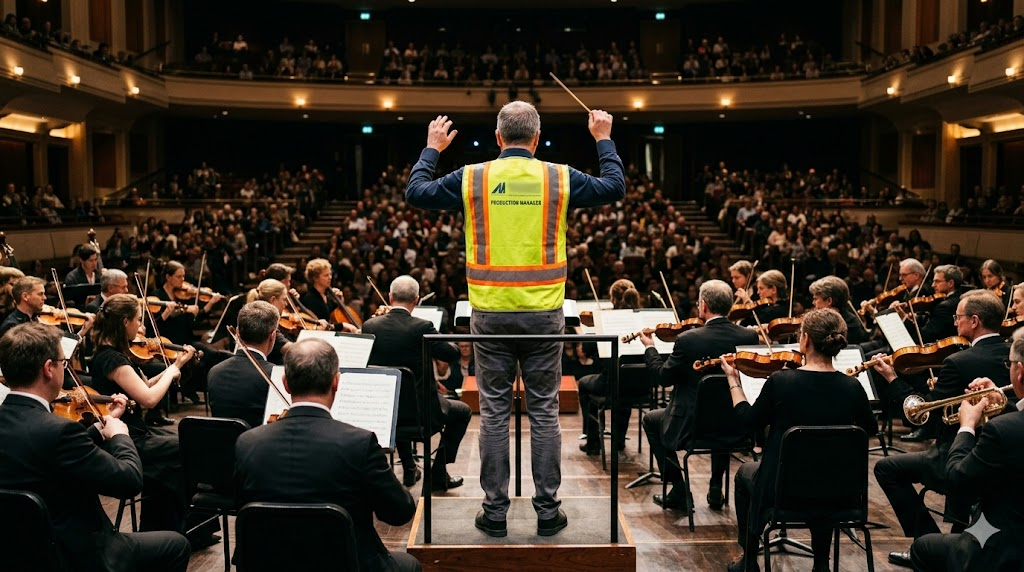
I like to think in terms of orchestration – it’s a bigger concept than automation.
Automation is the ability to move more volume through a particular stage of production. Orchestration is the ability to govern how volume moves across all stages – according to the priority rules that matter most to your business.
Those rules include due dates, customer ratings, VIP orders, production capacity by press and finishing line and service commitments. When a factory is orchestrated well, trade-off decisions don’t have to be made on the fly by supervisors and floor staff every single day. They become embedded in how the factory just works. Work flows according to its true priority, balancing efficiency, cost, service levels, and customer outcomes in a way that is consistent and measurable.
A Harmonious System, Not a Collection of Stages
The right frame for thinking about production is as a connected system rather than a sequence of individual steps. In a well-orchestrated factory, the question is never simply whether a particular machine or software tool is running faster. The question is whether the right volume of work is arriving at each stage at the right time – and whether the entire system flows at the right rate.
When that calibration is in place, the result isn’t simply a faster factory. It’s a more intelligent and lower cost one. Manufacturing becomes a single, harmonised flow. Efficiency is no longer something that has to be chased; it is the operating model itself.
Many automate, few orchestrate. Is that the gap in your business too?