A couple of years ago I wrote about how Software as a Service (SaaS) had helped level the playing field for SMBs in print on demand and make-to-order. Smaller manufacturers could access advanced automation capabilities that were once the domain of much bigger businesses.
But access to technology just to be more efficient is only part of the story. The far bigger opportunity is to use automation to exploit something smaller businesses already have: the ability to be agile.
Most businesses are afraid of change – it’s the old “if it’s not broke don’t fix it” mentality. But there is real competitive advantage in being more flexible, more adaptive and easier to do business with.
And smaller manufacturers with shorter decision paths, fewer organisational layers and close connections between management, sales and production, potentially have a big advantage. A customer asks for something a bit different and the business can react – and flex if the right tools are in place.
The problem is that many SMB’s haven’t automated sufficiently to turn that speed in decision making into production agility. According to the latest Printing United SODA research, 80% of firms have limited automation.
When production remains dependent on manual processes, every variation creates work, or a chance for error. A different product configuration drives another job with different downstream routing and finishing instructions. An extra inclusion requires someone to remember it, or a job sheet change briefed to an IT resource to script or code. A rush order has to be manually identified and ushered through production. It’s slow and inefficient.
Eventually the business starts protecting itself by saying no. Inflexible standardization becomes the way to maintain efficiency instead of being responsive to customer needs and chasing differentiation in the marketplace.
But doing that gives away one of the strongest advantages a smaller manufacturer has – to be agile and responsive to customer needs.
Automation drives advantage
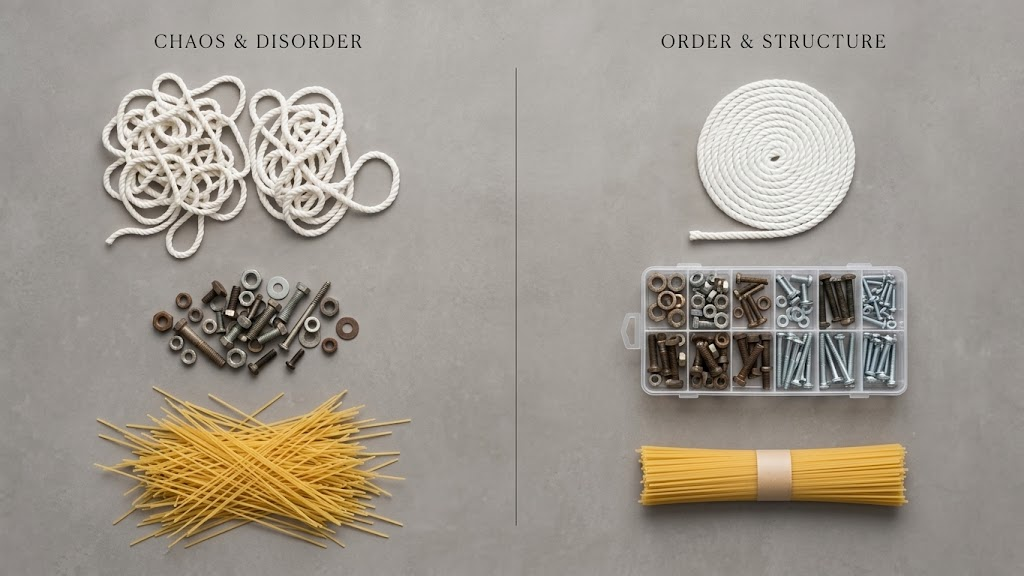
The objective of automation shouldn’t simply be to produce today’s work with fewer manual touches. It should make variation easier to accommodate.
Once products, workflows, production rules and SLAs are being managed systematically, different work doesn’t necessarily have to mean disproportionately more work. The automation looks after all of the queuing, batching, imposition, ganging, barcoding, job ticketing with custom instructions – seamlessly handling all the variation.
That changes what you can say yes to, for example:
- Expand range accepting a wider range of colors and styles (either stocked or virtually warehoused)
- Offer a range of inclusions or accessories
- Provide different service levels based on customer identity or status
- Plug in extra order sources and run faster.
- Add order level (not just product personalization) with custom letters, vouchers and cards that speak directly to your
- Build rush orders or even multiple levels of rush directly into your business process DNA with no operational stress.
The point isn’t to accept every difficult job. It is to build a production environment in which you can identify new business opportunities and embed them in your organisational processes – 1 mouse click to change. It means that you can do things that your competitors cannot and build a friendliness and flexibility moat around your business.
The distinction really matters.
Win the battle using your natural advantages
Large operators have obvious advantages in purchasing power, capital, capacity and scale. But scale also brings organisational complexity.
A new product, workflow or offering may touch sales, IT, operations, finance and production. Change needs to be coordinated.
That is a necessary part of operating at scale.
A smaller business doesn’t need to work this way.
If you combine shorter decision paths with an automated production environment that can absorb variation, you can compete on something quite different: speed of response and flexibility of offering.
A large competitor may be better priced but when needs are a little different, then there is a competitive weakness that can be exploited.
Your advantage may be simply being able to say: Yes, we can do that. And we can start this week and by the way we can also offer these product variations with these order personalisation options.
That is where automation and SMB agility become particularly powerful together. Technology provides the production discipline with flexibility; the smaller organisation provides the speed.
The value of flexibility
This also changes how you think about automation because the return isn’t only labour saved and materials efficiency. There is value in the order you can now accept that you previously would have declined and there is value in onboarding a new customer without creating a manual workflow around them.
Being able to do this in minutes rather than weeks removes the blocker to accepting change.
The bottom line is that there is real value in being the supplier who can handle the unusual requirement or meet the deadline when a larger competitor cannot respond or flex quickly enough.
Smaller manufacturers already have structural and cultural advantages that can make them more agile than much larger competitors. The opportunity is to automate the factory so that those advantages are simply the way you do business. No hassle, no stress.
Then use that agility deliberately and strategically to win.